FOUR TOES
Fox, dog or cat
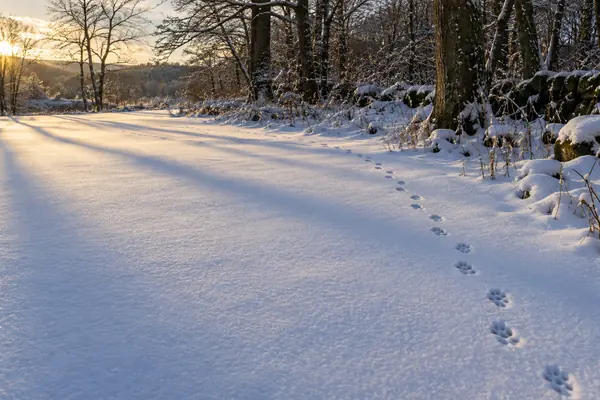
Fox, dog and cat all show four toe pads. Cats retract their claws, so no claw marks usually means cat. Fox prints are narrow and diamond-shaped.
Read a print doodletrack
WHAT THE EXPERTS SAY
Most wild mammals pass by unseen. Their footprints stay.
Read a print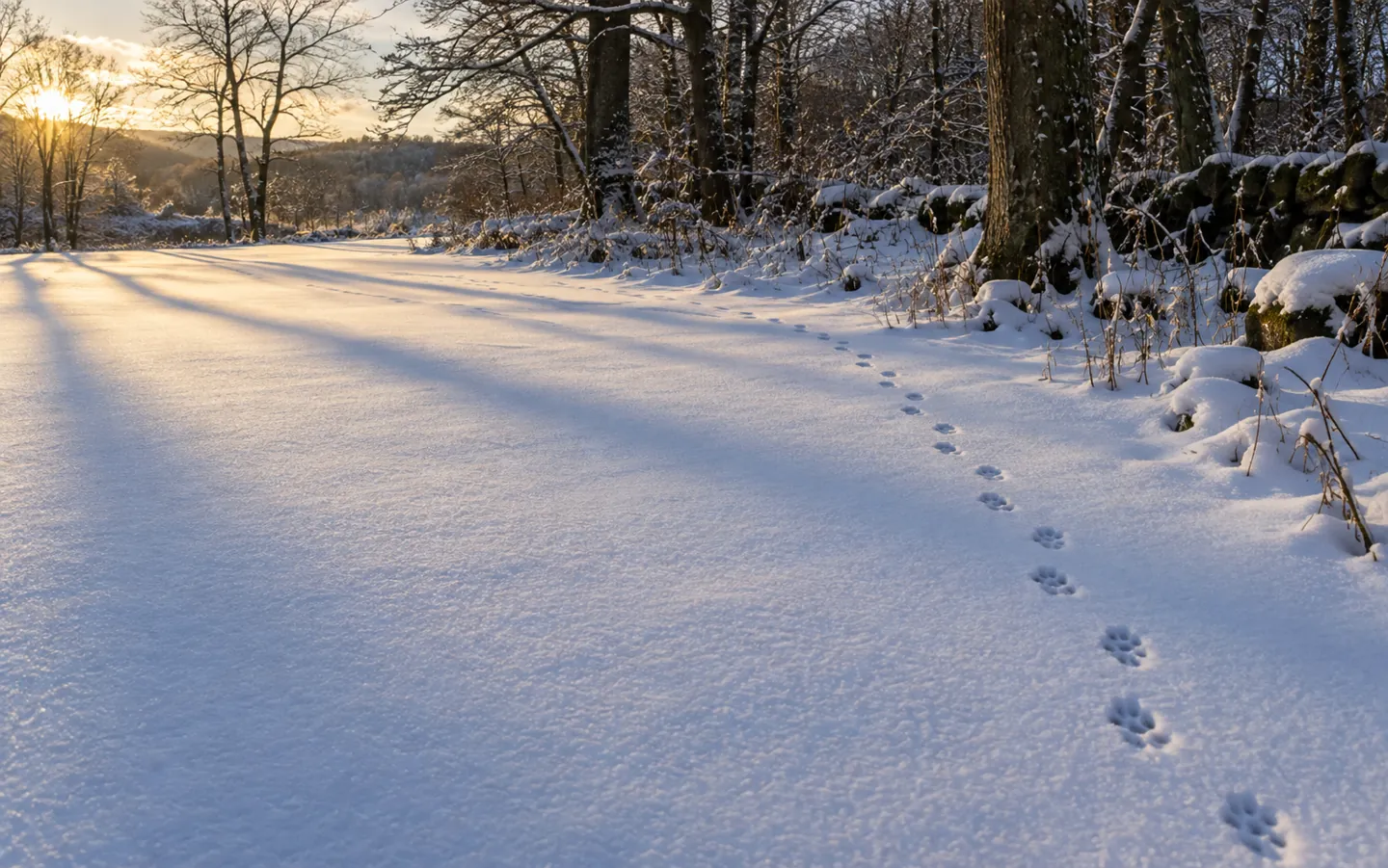
TOES · CLAWS · SIZEthree checks, one footprint
Many British mammals are most active at night, so tracks are often the easiest way to know they were there. Soft mud, sand and fresh snow hold the clearest prints, and three checks do most of the work.
At a glance
≈ 5 cm
Typical fox print length
The Woodland Trust gives about 5 cm long by 4 cm wide. Chester Zoo gives about 50 mm by 35 mm and says dog prints are similar in size but squarer.
FOX · WOODLAND TRUST
3–9 cm
Deer track length, muntjac to red deer
Chester Zoo puts deer track lengths at 30 mm for muntjac up to 90 mm for red deer. The Woodland Trust gives roe at about 5 cm and fallow at about 7 cm.
DEER · CHESTER ZOO
TWO SIZES WORTH KNOWING
Print length is one of the quickest clues,
though slips and soft ground can stretch a track.
Chester Zoo warns that animals climbing a bank, leaping or running may slip and leave bigger tracks, so it is best to base an identification on clear prints.
A QUICK PRINT CHECK
Pick what you can see in the mud to find the likely maker. The bar shows how big the print usually is.
Sizes from the Woodland Trust, Chester Zoo and Scottish Wildlife Trust. Sizes overlap, so look for other signs too.
THE SHORT ANSWER
The Woodland Trust says to check claw marks and toe count first,
then measure several prints along the trail.
FOUR TOES
Fox, dog and cat all show four toe pads. Cats retract their claws, so no claw marks usually means cat. Fox prints are narrow and diamond-shaped.
Read a printFIVE TOES
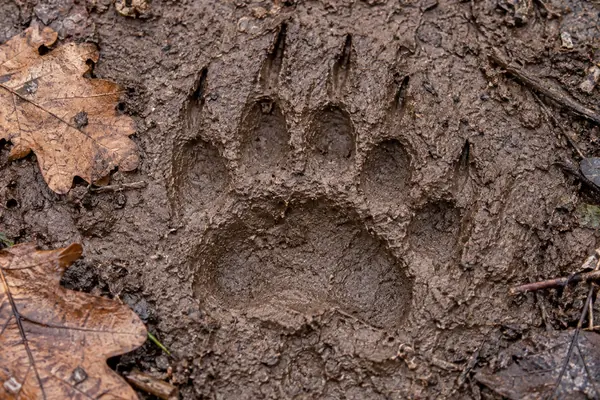
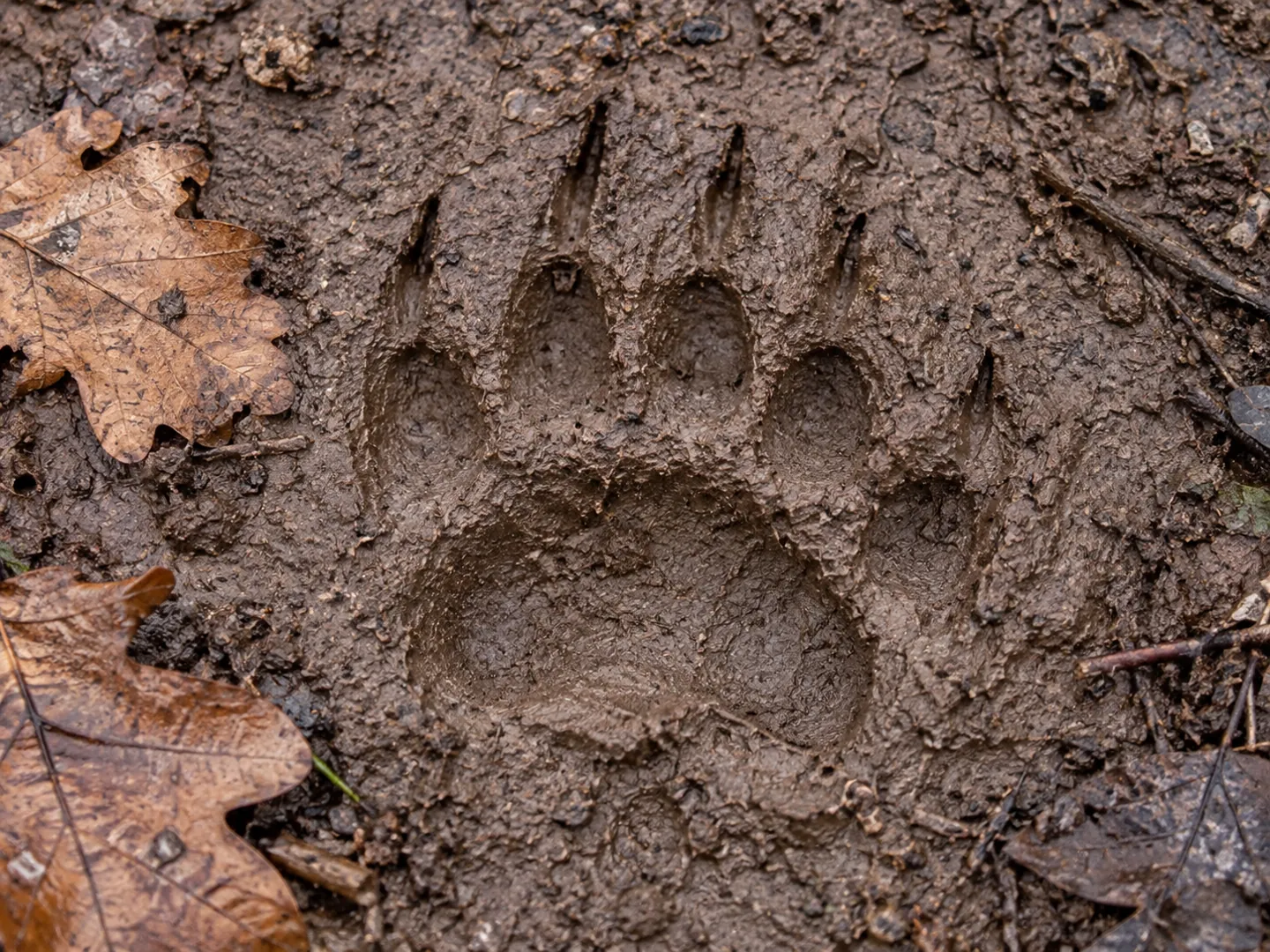
Badgers leave very broad prints, up to 6.5 cm across, with five toes in front of a wide rear pad and long claw marks on the fore feet.
See the sizesHOOVES
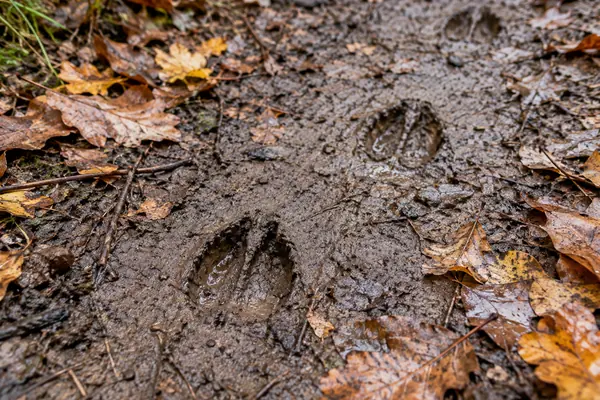
Deer leave two hoof halves that come to a point at the front, like an upside-down heart. Sheep prints are rounder at the ends.
How to look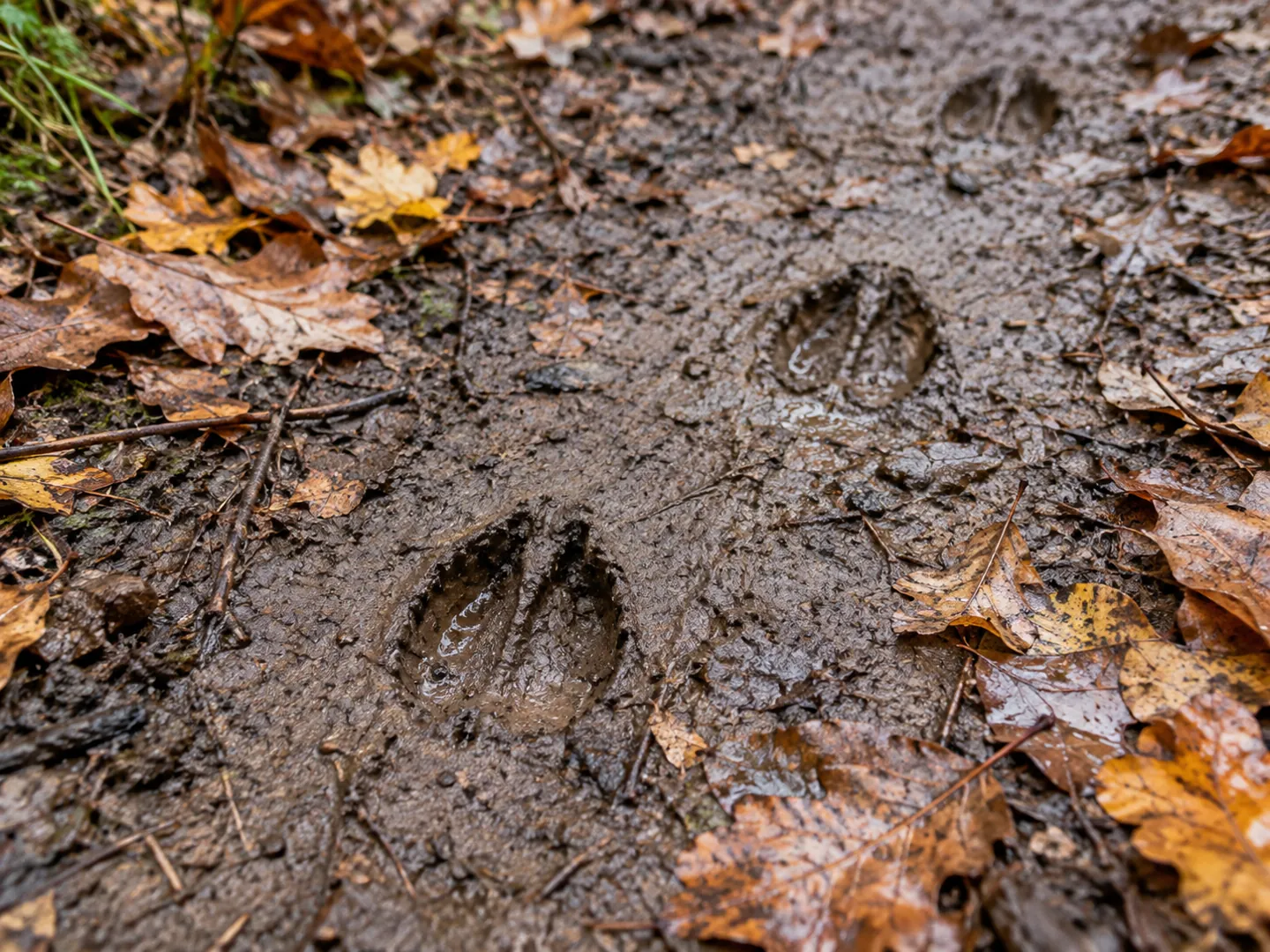
FOUR HABITS TO TRY
You need nothing more than a phone camera and a muddy walk. These habits come from UK wildlife charities and the Field Studies Council.
Look in soft mud, sand, frost or fresh snow, where prints hold their shape best. Winter is a good season for it.
Measure several prints and notice the pattern. Foxes leave a single straight line; dogs wander.
Take a photo and notes. The Field Studies Council says sketching and recording speeds up learning.
Droppings, fur, burrows and feeding remains help confirm a guess. Never handle droppings, and wash your hands after.
START WITH THE DOG
The Field Studies Council says beginners mostly find dog prints at first. Learning them well makes the differences from fox stand out: a fox print is narrower and more diamond-shaped, and its trail looks purposeful rather than erratic.
Beyond footprints, recordable signs include badger setts and latrines, squirrel dreys and feeding signs, otter spraints and rabbit warrens. Records can be sent to the Mammal Society through its Mammal Mapper app.
Questions
Fox prints are narrower and diamond-shaped, about 5 cm long, with toes closer together. Dog prints are squarer, and fox trails tend to run in a straight line while dogs wander.
Cats retract their claws when walking, so their four-toed prints usually have no claw marks. Fox and dog prints do show claws.
It is very broad, up to about 6.5 cm across, with five toe pads in front of a wide rear pad and long claw marks on the fore feet.
Only roughly. Lengths run from about 3 cm for muntjac to 9 cm for red deer, but sizes overlap and males leave larger tracks than females and young.
Winter is good, because snow and wet mud keep prints clearest. Hedgehogs hibernate, so their tracks are unlikely in snow.
Sources
ABOUT THIS NAME
doodletrack.com is part of the DoodleSale portfolio. It isn't in an auction right now, but you can ask about leasing it.